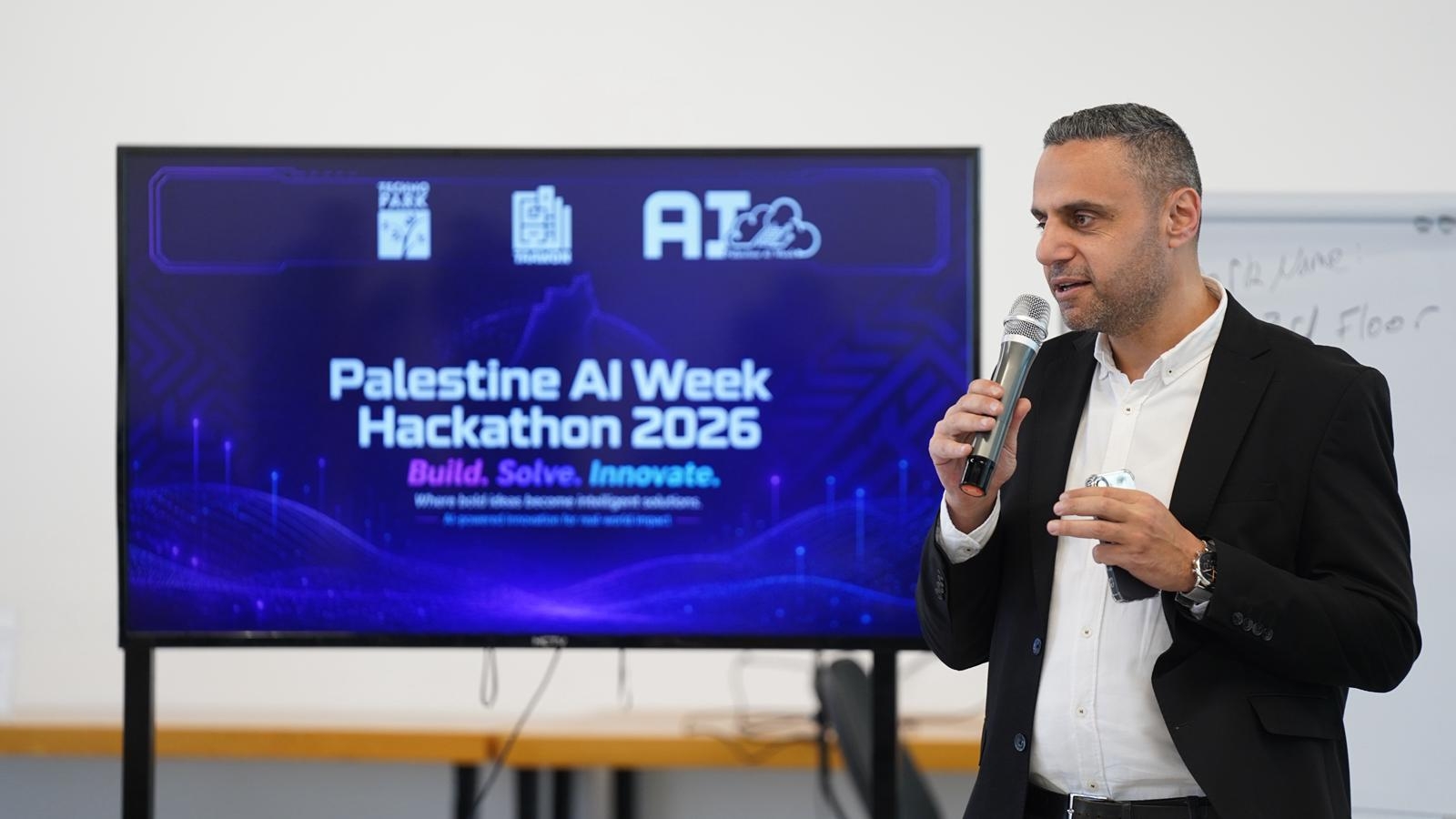
Ramallah – As Palestine AI Week unfolded across the West Bank and Gaza, it brought into focus a powerful narrative of resilience, creativity, and forward-looking ambition. At the heart of this effort, Taawon joined as a main partner, supporting a new generation of Palestinian innovators working to transform real-world challenges into practical, AI-driven solutions.
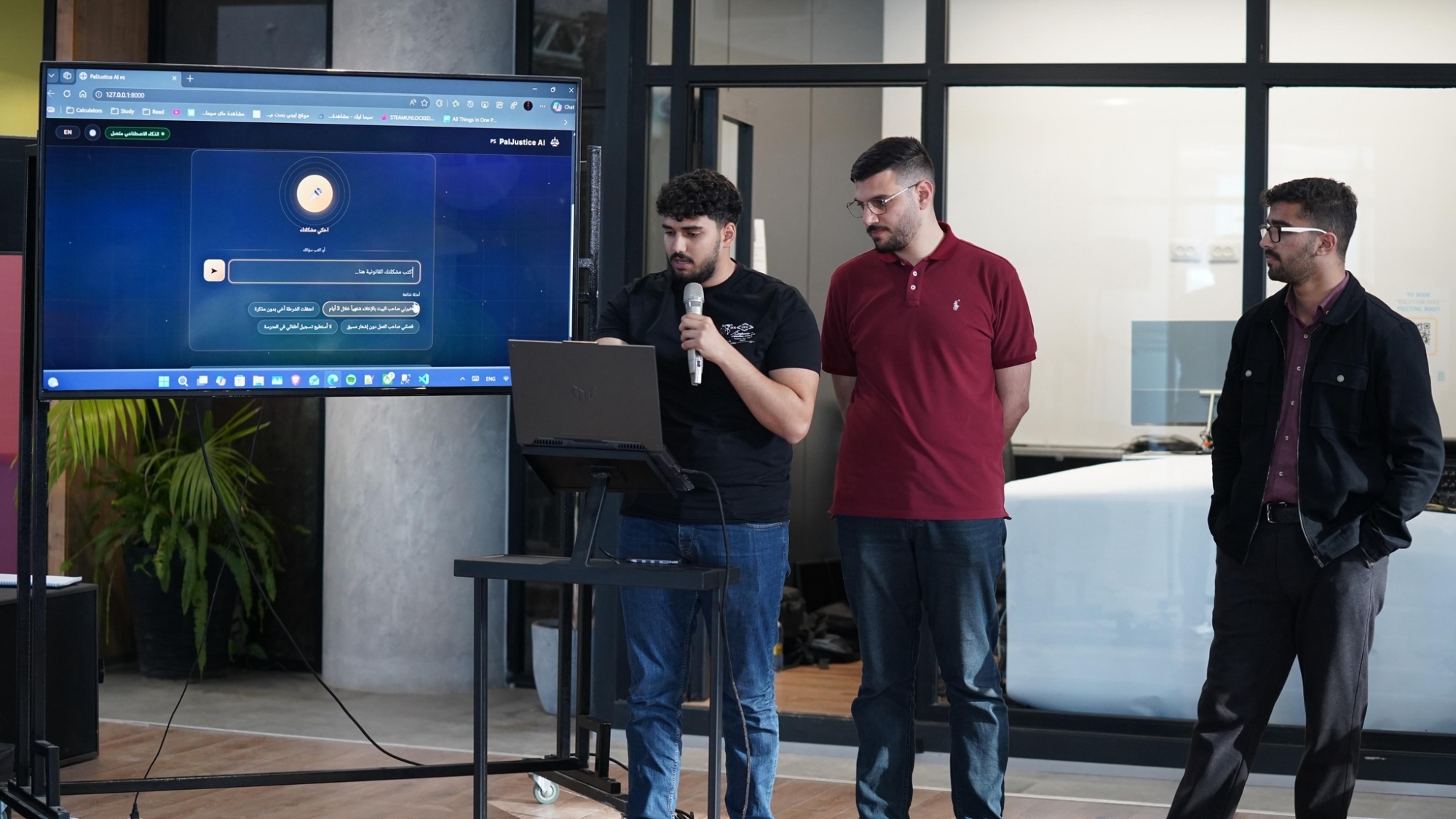
In the West Bank, the AI Hackathon emerged as a cornerstone of the week’s activities, attracting nearly 140 teams from across Palestine. Following a competitive selection process, 40 teams advanced to the final stage, developing approximately 15 innovative concepts. What distinguished these projects was not only their originality, but their readiness. Many were presented as fully functional, application-ready solutions, reflecting a high level of technical capability and collaborative thinking.
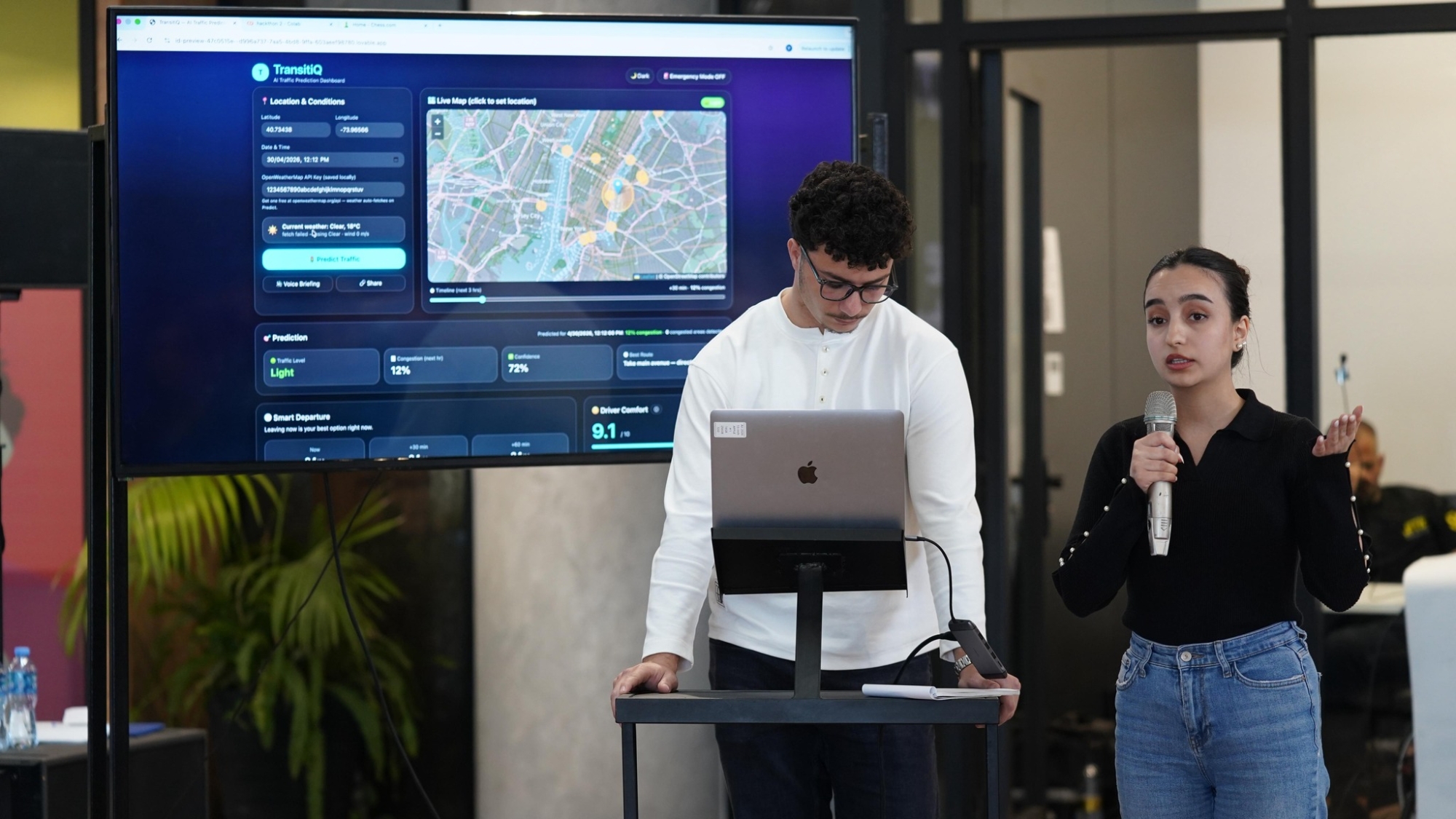
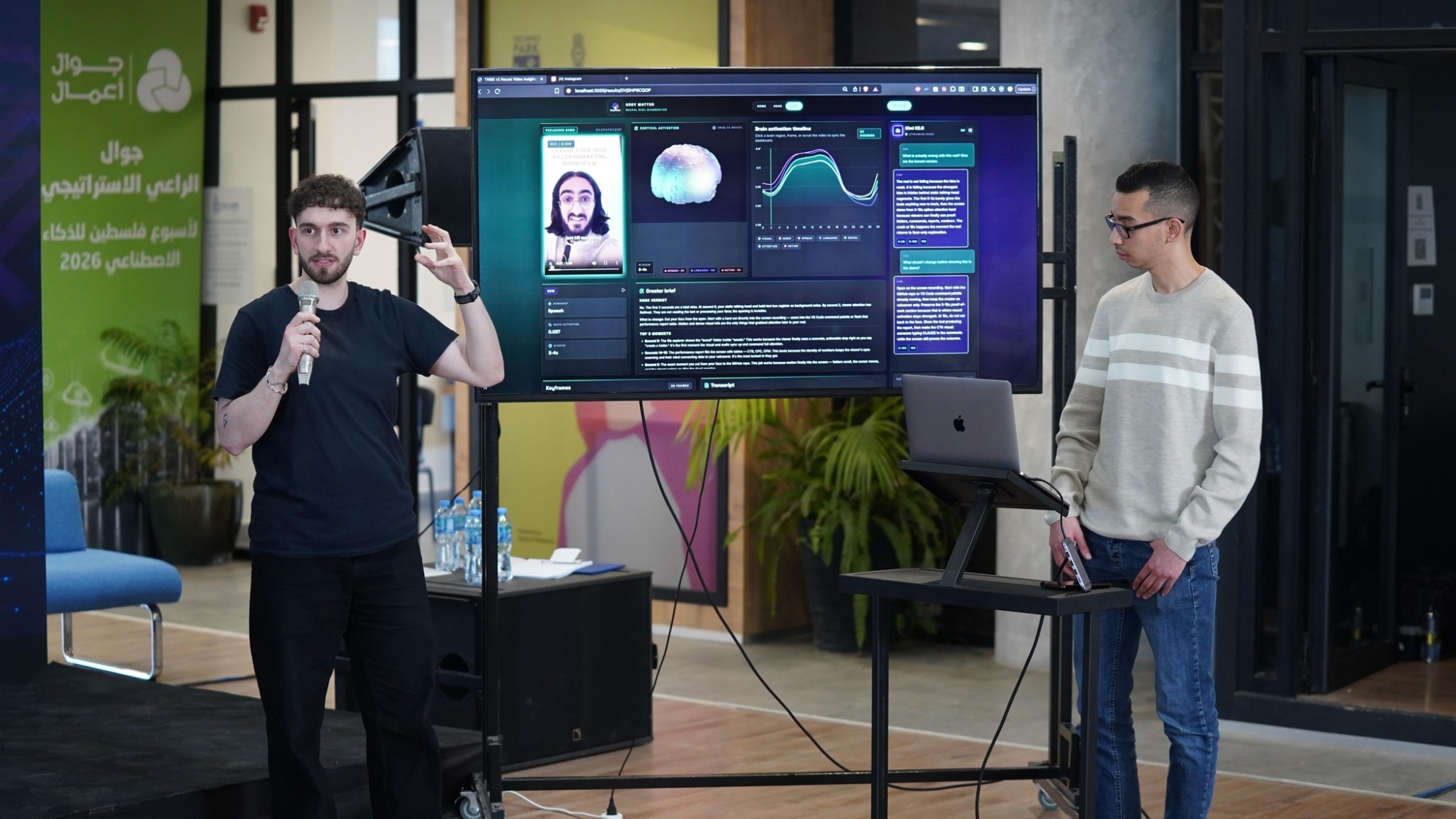
The first-place project, LifeBraceletAI, introduced an AI-powered wearable designed to prevent child drowning by analyzing biometric data and identifying risk patterns before incidents occur. In second place, MeshwarAI offered a real-time navigation solution tailored to the Palestinian context, providing live updates on checkpoints and road conditions to support safer mobility. The third-place project, GreyMatterAI, explored the intersection of technology and neuroscience, using artificial intelligence to assess how video content impacts brain activity, offering new insights into content effectiveness.
Other standout solutions reflected the breadth of innovation emerging from Palestinian youth. These included QBrain, a platform that streamlines software testing through AI-generated quality assurance scenarios; TurathAI, which leverages artificial intelligence to preserve and document Palestinian cultural heritage; and MedVault, a secure digital system for managing personal medical records. Additional projects addressed sectors ranging from healthcare and education to legal services, entrepreneurship, and digital marketing.
Taawon’s contribution extended well beyond sponsorship. Members of its team played an active role throughout the Hackathon, participating in the selection process, mentoring teams, and serving on the final jury panel, helping guide ideas toward meaningful application.
Reflecting on the week, Mr. Saad Abdulhadi, a member of Taawon, said:
“Palestine AI Week has shown us what becomes possible when research and practice come together. We are witnessing ideas take shape as real solutions, and innovation translate into tangible impact in people’s lives. Artificial intelligence is no longer a distant prospect. It is already shaping our future, and it is essential that our youth are equipped not only to participate, but to lead.”
He added:
“At Taawon, our support for initiatives like this is rooted in our broader mission to strengthen Palestinian resilience and expand opportunities for growth. What these young innovators are building today is a meaningful step forward. The journey does not end with recognition. It begins with it.”
Extending this momentum beyond the West Bank, Taawon supported the “10-Hour Challenge” Hackathon in Gaza, bringing together 10 youth teams in an intensive innovation sprint. Over ten continuous hours, participants worked under pressure to develop AI-based solutions addressing pressing community needs. The initiative offered a rare space for hands-on collaboration, rapid prototyping, and knowledge exchange, reflecting both the creativity and determination of Gaza’s youth.
In a message following the event, Taqat Business Incubator highlighted that participants “challenged time itself to build real AI projects within ten continuous hours,” describing the results as “highly promising” and underscoring the importance of sustained investment in young talent.
Taawon also took part as a main partner in the AI Research Awards Ceremony, which recognized outstanding academic contributions in the field. The first-place award went to a team from the Arab American University for Jawed AI, an intelligent system designed to detect and correct Tajweed errors in Qur’anic recitation. Second place was awarded to a team from Bethlehem University for a deep learning model focused on early breast cancer detection in resource-limited settings. Third place went to a team from An-Najah National University for Ghurzat Watan, a digital framework that uses artificial intelligence to preserve and reconstruct Palestinian cultural heritage.
Across both the West Bank and Gaza, the contours of a more connected and dynamic innovation ecosystem are becoming increasingly visible. Driven by young people with the skills and vision to shape the future, these efforts point toward a more resilient and adaptable digital economy.
Through its engagement in Palestine AI Week, Taawon reaffirms its commitment to investing in youth as a cornerstone of sustainable development. By supporting initiatives that bridge knowledge and application, the organization continues to open pathways for innovation that can deliver lasting impact.